80 / 15 / 5 is the category rule
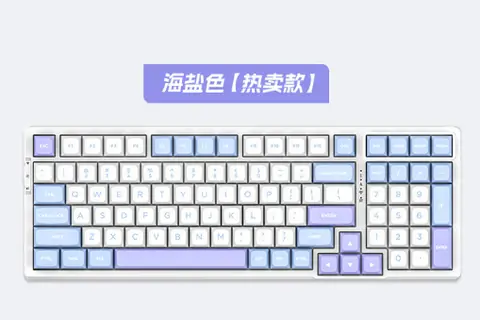
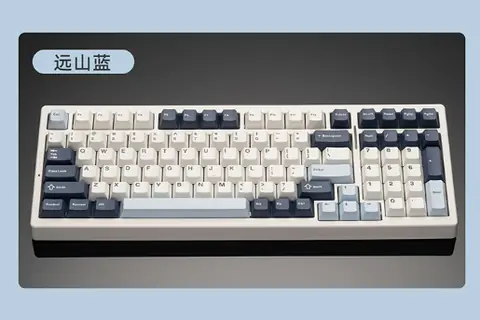
Three JD sales cycles showed a consistent hierarchy: calm base, supporting contrast, then one deliberate point of energy.
A smoky translucent shell over a gasket-mounted structure — hot-swap sockets underneath, so every switch and stabilizer stays exactly where you can see it.
Trace your cursor across the deck to find the colorway underneath the frost — the same tone it ships with, right out of the box.
That's the gap ASUS had to close. Here's how data got us there.
Three JD sales cycles showed a consistent hierarchy: calm base, supporting contrast, then one deliberate point of energy.
The key field stays quiet. Navigation and edit zones become the visual signature.


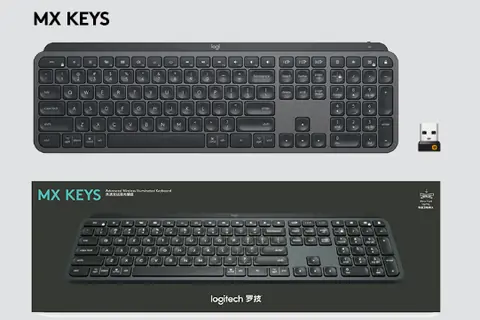
The best-sellers don’t live at either pole. They sit in between — gaming-grade hardware in a calmer skin. Their buyers love tech, and many work in offices where Logitech-grey won’t do. So our lifestyle is tech-leaning and trend-aware: colorful, never loud.
THE BALANCE POINT OUR ID REFERENCE POINTS TO → EIGHT PERSONAS NEXTJD best-sellers, ¥300–500, three sales cycles.
Base color: low-risk, keep it neutral. Accent: that's where the real bet goes.
Zones locked to brand palette vs. zones open to experiment — mirrors the 80/15/5 split.
Five details reviewers praise unprompted, on any transparent board:
Clear Minimalism won — but not for one type of desk. Eight personas, next, to stress-test it.
Landed on C — enough to show the gasket-mount is real, without losing the finished-product feel.
Clear, gasket-mounted, unmistakably transparent — that became Jelly75.
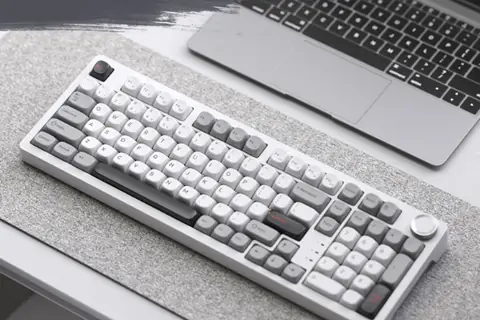
Colorful, but never out of place: base tones stay office-safe, and the accent colors come from ASUS’s CMF library, blended with our market research and the traits of best-selling products. Two directions came out of it: Energetic (動感蓄能) and Natural (自然山氣).
Scroll to explore the eight colorway proposals.
Fluorescent, charged, a little loud. High-chroma accents on office-safe base tones — a desk that switches on the moment you sit down.
Earth, moss and sun-bleached stone. Softer, weathered tones that bring a trail-side calm to the desk without leaving the office.
A FIRST, THEN B — THEN THEY CONVERGE ↓
Prototypes on the desk, parts on the floor. A loud, chemical-bright accent for someone who's always mid-project.
Streetwear-first, keyboard-second — but only if the keyboard can keep up. Loud orange, unapologetically.
Pastel desk setup, gradient everything. A gentle, glowing palette for a workspace that feels like a mood board.
Gear-first thinking, utility straps and all. A disciplined navy-and-orange pairing built for function over flash.
Tent one week, coffee shop the next. Earthy, sun-bleached tones that don't show the dust.
Color-blocked, weatherproofed, always ready to add a layer. A rugged orange-and-green combination.
Quiet, considered, a little literary. Muted sage and stone for a desk that stays out of the way.
Pack loaded, boots on volcanic rock. Sage green, sun-orange and clean white — a palette borrowed straight from the trail.
Every Jelly75 ships with a contrast-cut Esc key and spacebar that break up the deck at a glance. Pick Orange Meadow for a warmer, retro-leaning desk, or Volt Green for something louder — the soft white backlight underneath adjusts across four brightness levels either way.
A full gasket-mount structure floats the plate on a cushion instead of screwing it straight to the case, so every keystroke lands softer and quieter. It's the same structure you can see straight through the smoky shell.
Switches are rated for 50 million keystrokes, and the anti-slip PC keycaps hold their texture and legends long after cheaper boards fade. Charge it over USB-C and it keeps going for weeks on a single charge.